


Built for retail stores, shopping centers, and showrooms
Retail Display Lighting Retrofits
If your lighting is flat, your products look flat.
In retail, lighting controls what customers notice first. It determines which displays pop, which products get ignored, and how long someone engages with what you’re selling.
LED retrofit lamps let you upgrade that experience fast—brighter displays, better beam control, lower energy use, and fewer burnouts—without replacing your fixtures.
Choose The Right Retrofit Strategy For The Selling Floor
The first question in retail lighting is not “Which lamp do I buy?” It is “What exactly am I trying to sell with light?” Focused accent lighting and broad ambient coverage solve different retail problems.
PAR56 LED Retrofit Lamps
Best for tighter display lighting where the goal is to pull the customer’s eye toward specific merchandise.
- Window displays
- Mannequins and apparel walls
- Feature tables and end caps
- Jewelry, specialty, and high-value product zones
PAR64 LED Retrofit Lamps
Better for larger retail facilities where you need more punch, more throw, and more consistent illumination across a wider sales floor.
- Big-box retail
- Department store zones
- Shopping center tenants with higher ceilings
- Broad floor coverage and perimeter display areas
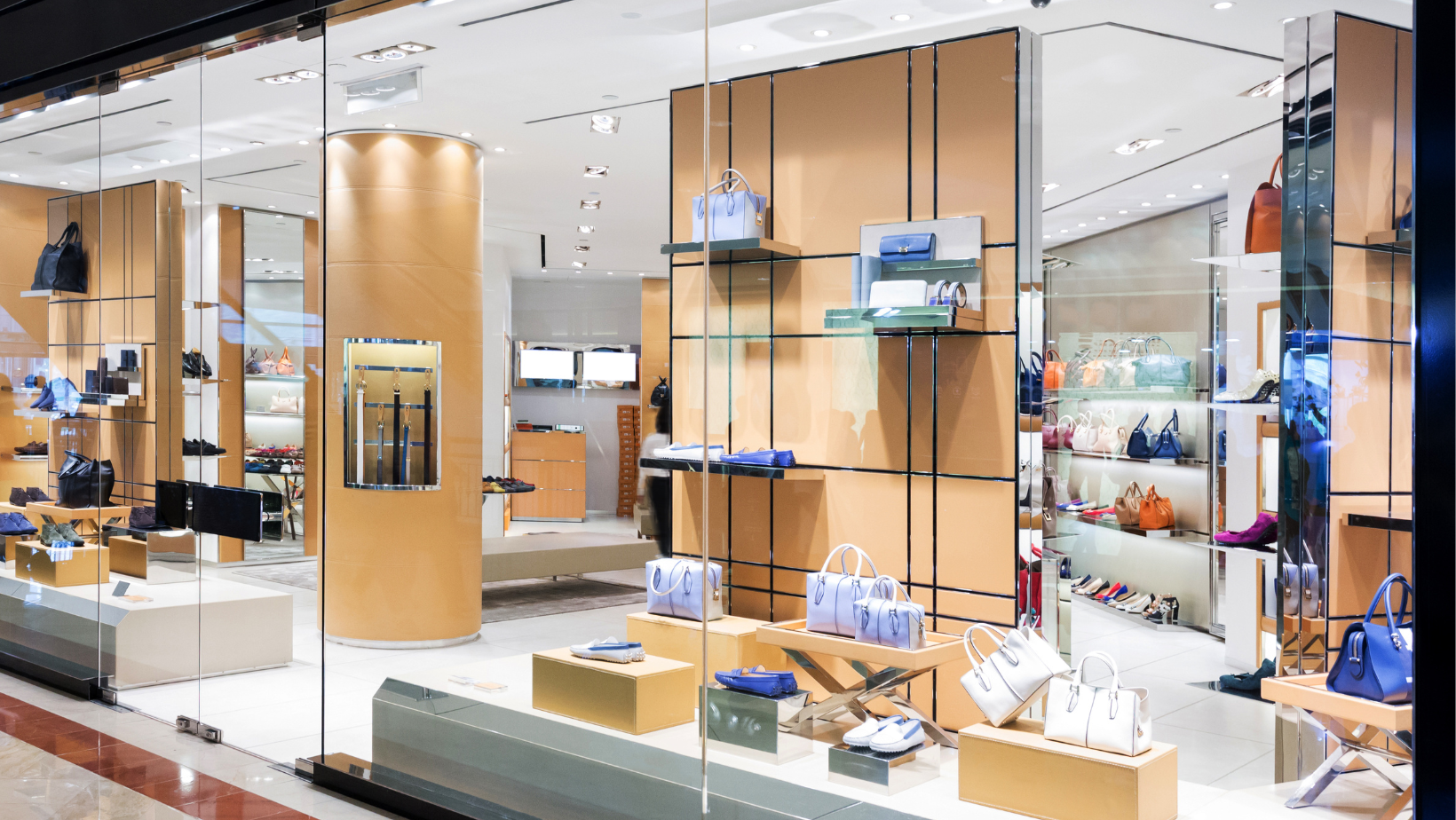
Why Retail Lighting Directly Affects Sales Performance
In retail, customers do not experience products in isolation. They experience products through light. Beam spread, contrast, color accuracy, vertical illumination, and fixture placement all influence whether merchandise looks premium, flat, warm, clinical, luxurious, or forgettable.
Good retail lighting does four jobs at once: it makes merchandise easy to see, organizes visual hierarchy across the store, supports the brand atmosphere, and reduces operational friction for the facility team. When any of those four functions break down, the store usually feels “off” long before anyone can explain why.
That is why retail lighting retrofits should be treated as a merchandising decision and an operating-cost decision at the same time.
Retail Operating-Hour Reality
Retail lighting is usually not a light-duty application. It is a high-burn-hour environment, which means even small efficiency gains compound quickly.
- Mercantile buildings average 64 operating hours per week
- Retail (other than mall) averages 66 hours per week
- Enclosed and strip malls average 61 hours per week
- Food sales buildings average 110 hours per week
That operating profile changes the economics of lighting fast. A lamp that looks “good enough” in a short-burn application becomes expensive in retail because the burn hours magnify every weakness: wattage, heat, relamping labor, color drift, and inconsistent presentation across the floor.
For shopping centers, grocery operators, chain retailers, and larger format stores, this is where LED retrofits become more than a cosmetic upgrade. They become a facility-level cost-control strategy.
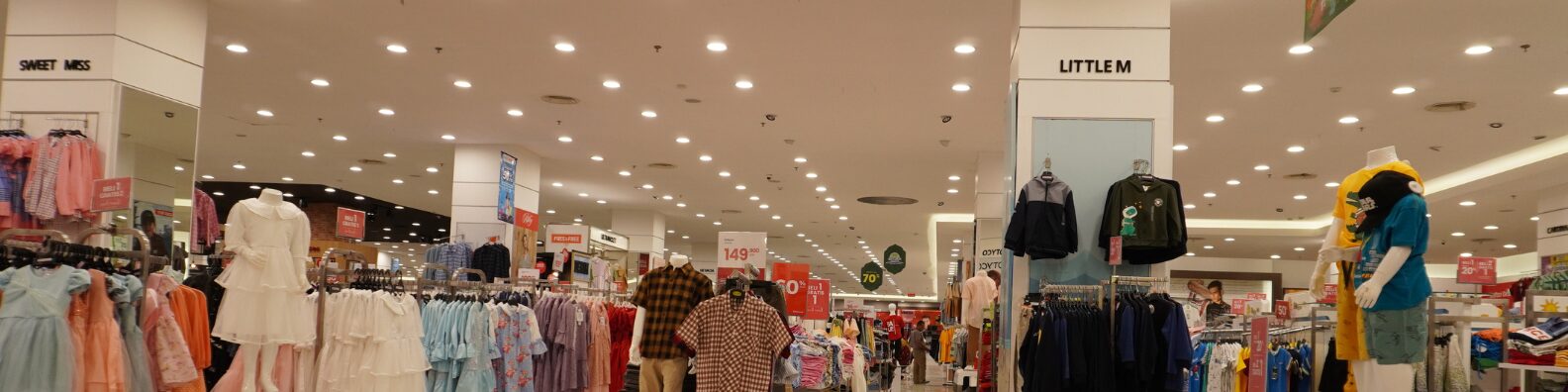
Lighting That Highlights Products Instead Of Flattening Them
Effective retail lighting creates contrast where it matters. It helps a featured product read as featured. It helps color look intentional. It helps texture, finish, packaging, and detail register immediately.
This matters in apparel, beauty, footwear, home goods, electronics, specialty retail, and promotional environments where the customer is making quick visual judgments. Weak lighting reduces perceived product quality. Well-controlled lighting increases product legibility.
Beam control is a big part of that. A 25° or 40° beam often works well in retail because it can place light precisely on displays while still preserving overall visual balance across the store.
Flexible Lighting For Seasonal Resets And Promotional Turnover
Retail displays change constantly. New product launches, seasonal sets, window rotations, end-cap promotions, clearance campaigns, and brand activations all change what the lighting needs to emphasize.
LED retrofits give store operators a more stable base layer while still supporting dimming and display adjustments. That makes it easier to refresh the selling floor without fighting heat, burnouts, or inconsistent light levels from aging lamps.
Color Fidelity, R9, And Chromaticity Stability In Retail
Retail lighting is not just about lumens. It is about how merchandise actually looks under the lamp. The Department of Energy notes that color fidelity can be evaluated with CRI or with TM-30 metrics, that a minimum CRI of 80 is generally recommended for interior lighting, and that CRI 90 or higher indicates excellent color fidelity.
For retail environments, that is not a minor detail. If colors drift or red tones collapse, apparel, cosmetics, décor, packaging, and premium materials can read incorrectly. DOE also notes that chromaticity stability is crucial in retail stores, especially in applications where multiple lamps wash a wall or where objects are evaluated based on color.
- CRI helps describe overall color fidelity
- R9 matters when you care about saturated reds, skin tones, and warm merchandise tones
- TM-30 gives a more detailed view of fidelity and gamut than CRI alone
- Chromaticity stability matters when adjacent fixtures need to match over time
Technical Planning Priorities For Retail Facilities
Ceiling height: higher ceilings usually push the design toward stronger output or broader coverage strategies.
Display hierarchy: window displays, feature tables, wall bays, and perimeter shelving should not all receive the same lighting treatment.
Burn hours: long daily operation makes wattage, lifetime, and relamping cost material to the business case.
Merchandise type: apparel, beauty, décor, grocery, and general merchandise do not have the same color and beam priorities.
Control strategy: retail operators should plan around daylight, exterior schedules, low-traffic areas, and fixture maintenance rather than treating every fixture as always-on.
Controls, Cleaning, And Operational Discipline
ENERGY STAR’s retail store / wholesale club / supercenter checklist highlights several operational tactics that are especially relevant in retail facilities: occupancy sensors for low-traffic areas, timers or daylight sensors for exterior and parking lighting, dimming controls near windows and skylights, and regular cleaning of lamps and fixtures to maintain maximum light output.
That matters because retail lighting performance is not just a product spec problem. It is also a control problem and a maintenance problem. Dusty lenses, mis-aimed heads, daytime exterior burn, and dirty sensors quietly erode lighting quality and energy performance.
In larger retail facilities and shopping centers, these operational details can create meaningful differences in utility spend, lamp life, and consistency across tenant or department zones.
Retail Lighting ROI
The longer a retail facility waits to correct weak lighting, the longer it pays for inefficiency in three different ways: higher electricity consumption, more frequent relamping, and lower visual selling performance.
- Reduce energy use by up to 70–80%
- Cut lamp replacement frequency
- Lower heat build-up in sales areas
- Stabilize display presentation across long operating schedules
For retailers running dozens or hundreds of fixtures across long operating hours, delay has a cost. The store keeps paying for lighting that is no longer helping merchandise the way it should.
Request A Retail Lighting Recommendation
Tell us about your ceiling height, display layout, merchandise mix, and current fixture setup, and we’ll recommend the right PAR56 or PAR64 retrofit strategy for your store, shopping center space, or retail facility.