

3000K vs. 4000K vs. 5000K Lighting
June 5, 2026
LED PAR Lamp Retrofit and Standalone Fixture Options with Lotus Lamp
July 9, 2026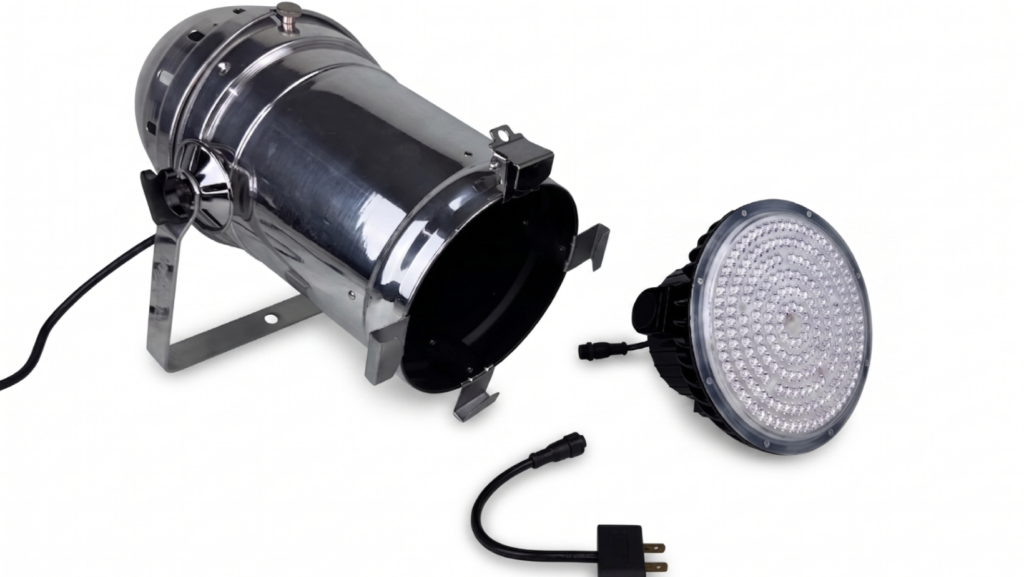
Ordering LED retrofit lamps should not feel like guessing at a lighting menu in the dark. If you manage a church, school auditorium, theater, event venue, convention space, restaurant, retail display, or multipurpose facility, the best lighting upgrade starts with a simple audit of what you already have.
Before you buy PAR56 or PAR64 LED retrofit lamps, take a little time to document your existing PAR can fixtures, fixture locations, beam needs, dimming setup, power connections, and color temperature goals. That quick audit can help you avoid ordering the wrong lamp, choosing the wrong beam angle, under-lighting the space, or creating extra installation headaches later.
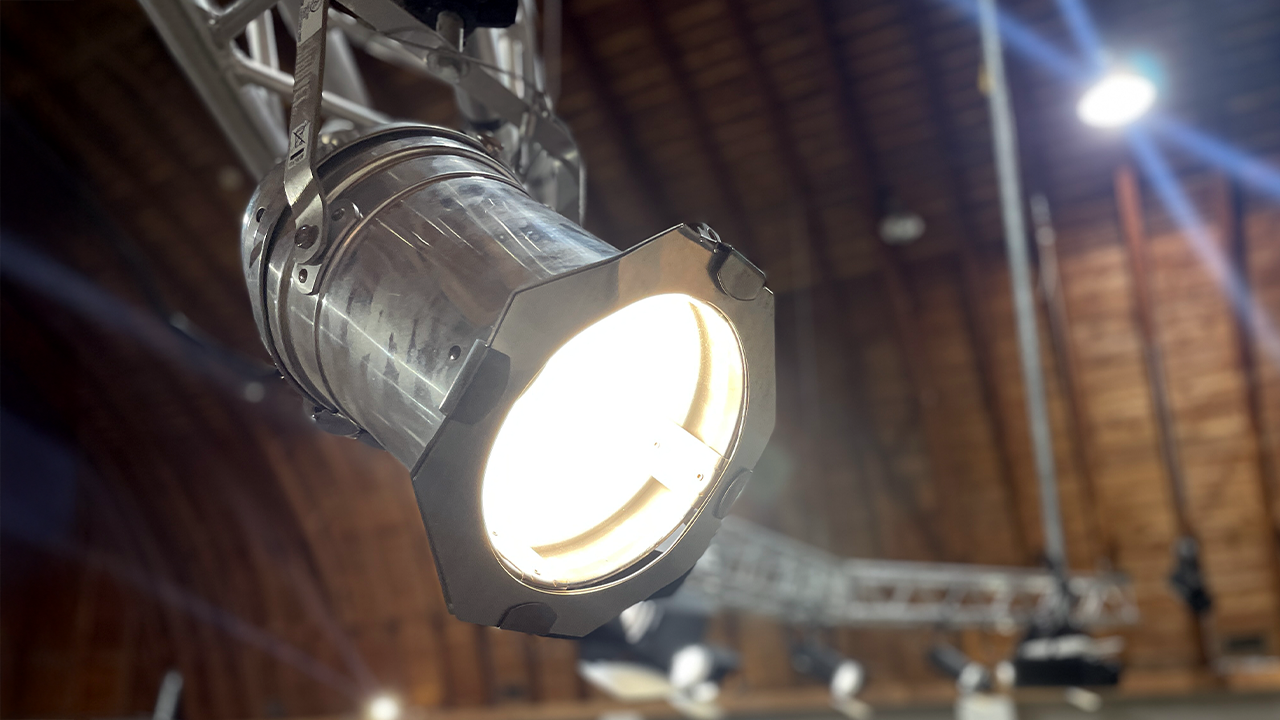
Quick takeaway: A PAR can retrofit audit is simply a pre-purchase checklist. Count your fixtures, confirm whether they are PAR56 or PAR64, measure mounting height and throw distance, identify beam angle needs, check the power connection, confirm dimming compatibility, and choose the right color temperature for each space.
Why a Retrofit Audit Prevents Costly Ordering Mistakes
A PAR LED retrofit is usually much simpler than replacing an entire lighting system, but it still needs to match the fixture and the application. The wrong lamp can create frustrating problems: a beam that is too narrow, a wash that is too wide, output that is too low, a dimmer that does not behave correctly, or a connector that does not match the existing setup.
A good audit helps you make the right buying decision before lifts, ladders, electricians, volunteers, or maintenance crews get involved. That matters because many PAR fixtures are mounted above stages, seating areas, platforms, sanctuaries, balconies, retail displays, or event spaces where access can be time-consuming.
There is also a strong efficiency reason to get the upgrade right. ENERGY STAR notes that lighting accounts for a meaningful share of electricity use in U.S. commercial buildings, and LED upgrades can reduce energy use while extending lamp life. But the best savings and performance come from choosing lamps that actually fit your space, usage, and controls.
PAR Can Retrofit Audit Checklist
Use this checklist before ordering. You do not need a full engineering study to get started, but the more information you collect, the easier it is to choose the right PAR56 or PAR64 LED retrofit lamp.
Pre-Purchase Audit Notes
- Count all existing PAR can fixtures by room, zone, or stage area.
- Confirm whether each fixture is PAR56, PAR64, or another size.
- Record mounting height and estimated throw distance.
- Identify the goal for each zone: spotlight, stage wash, platform lighting, display lighting, ambient fill, or general coverage.
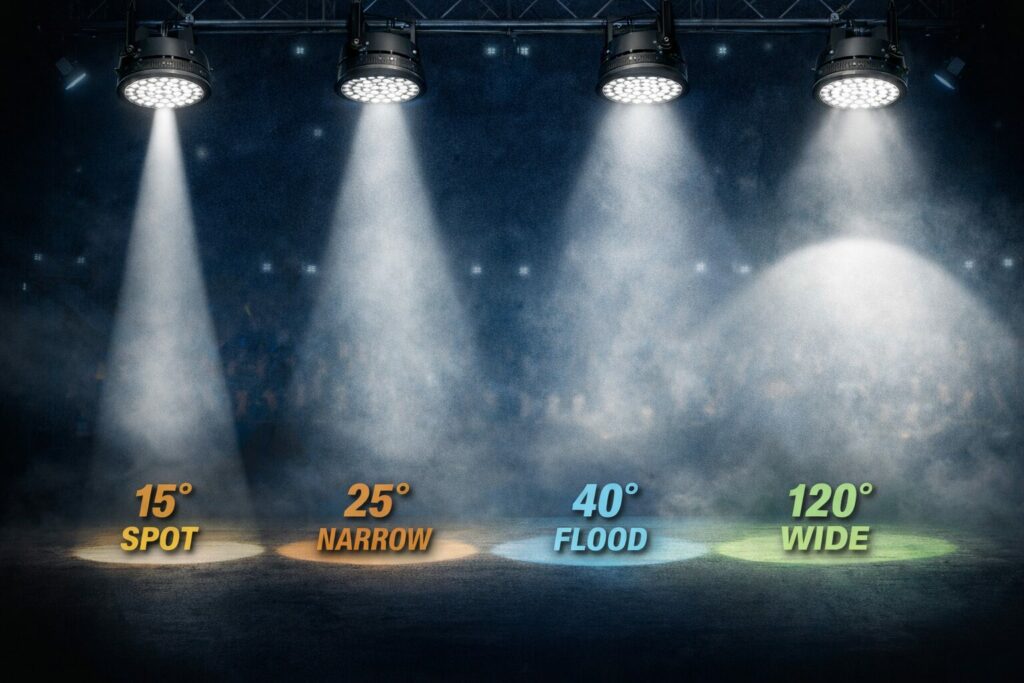
- Choose likely beam angles for each zone: 15°, 25°, 40°, or 120°.
- Photograph the existing socket, wiring, connector, and fixture interior.
- Check whether the fixtures are controlled by standard switching, TRIAC dimming, 0–10V dimming, or another system.
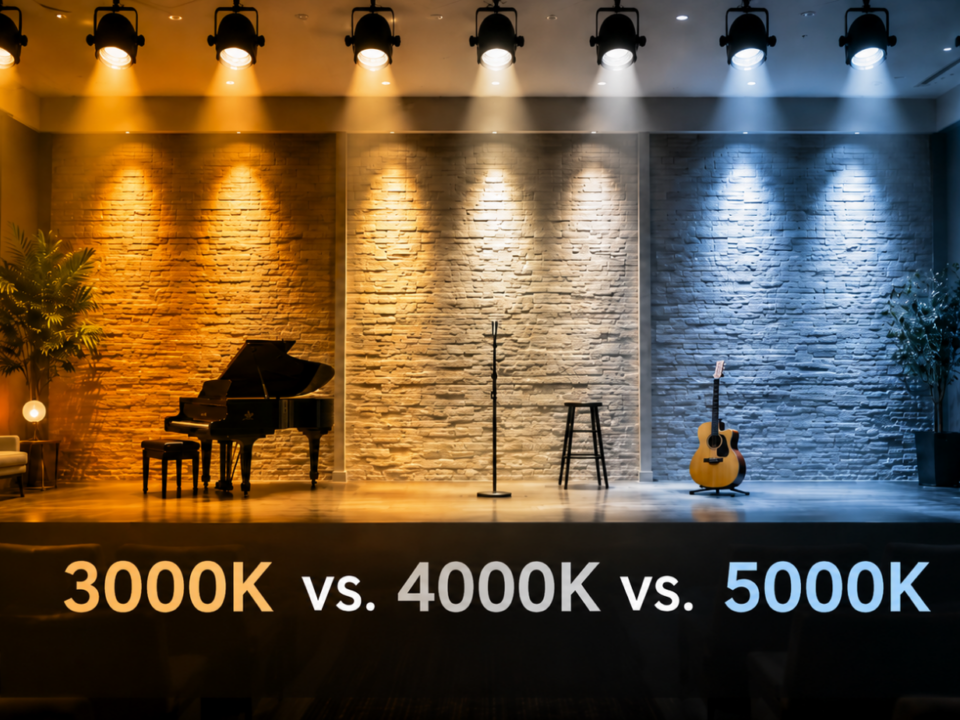
- Decide whether the space needs 3000K warm white, 4000K neutral white, or 5000K cool white.
- Note any dusty, damp, semi-exposed, outdoor, high-heat, or hard-to-access conditions.
- Send the details to PAR LED Lights if you want help choosing the right retrofit lamp.
Step 1: Count Your Existing PAR Can Fixtures
Start with the simplest step: count the fixtures. Walk the space and write down how many PAR cans are in each area. Do not count the entire room as a single group. Break the room into useful lighting zones.
For example, a church may have separate zones for the pulpit, choir, worship team, stage edges, seating area, livestream area, and fellowship hall. A theater may have front wash, side light, backdrop light, aisle coverage, and accent areas. A hotel ballroom may use different fixtures for presentation, banquet, and event lighting.
The goal is to understand how the space actually uses light. One venue may have 20 PAR cans, but that does not mean all 20 should use the same output, beam angle, or color temperature. A zone-by-zone count gives you a cleaner buying plan.
Step 2: Confirm PAR56 vs. PAR64 Fixture Size
After counting fixtures, confirm the fixture size. The two main retrofit families available from PAR LED Lights are PAR56 and PAR64. Both are designed to upgrade existing PAR can fixtures, but they are not interchangeable in every application.
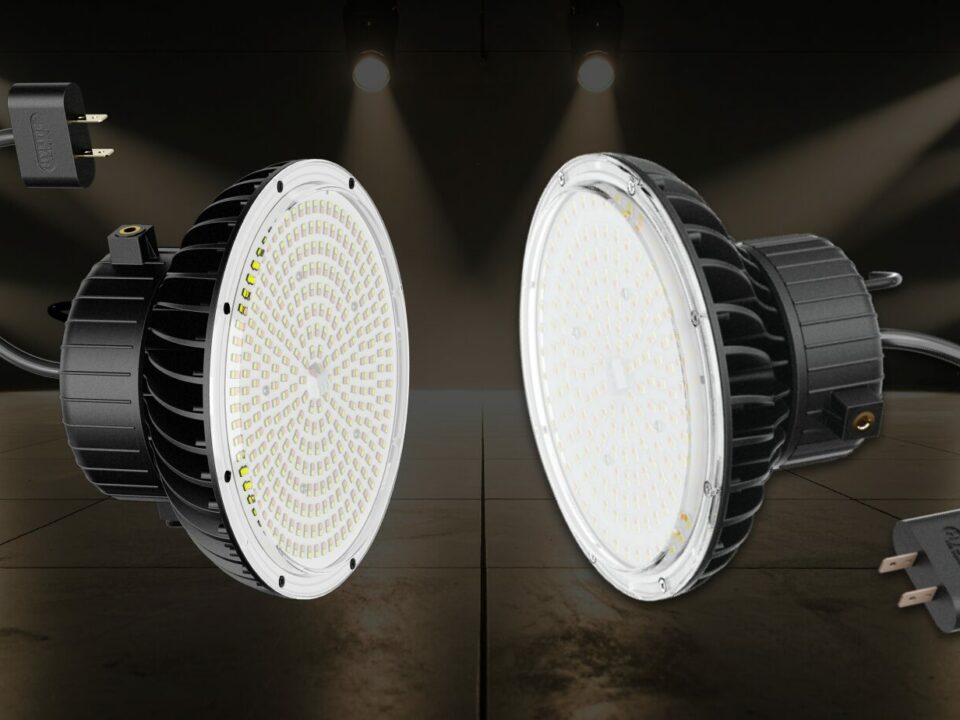
As a general buying path, PAR56 is often the better fit for smaller fixtures, lower mounting heights, tighter zones, and many everyday platform or stage wash applications. PAR64 is usually the stronger choice for larger fixtures, higher ceilings, longer throws, wider stages, and larger auditoriums or performance spaces.
| Lamp Family | Typical Output Option | Best Starting Point For |
|---|---|---|
| PAR56 LED Retrofit Lamps | 40W / 60W dual-wattage operation | Smaller fixtures, shorter throws, platform lighting, general wash, retail accents, and moderate mounting heights |
| PAR64 LED Retrofit Lamps | 100W / 150W dual-wattage operation | Larger fixtures, longer throws, higher ceilings, stage wash, auditoriums, theaters, sanctuaries, and larger venues. |
Not sure which one you have? Take a photo of the existing fixture, lamp, and socket area. If you can find markings on the lamp, can, or fixture label, write those down too. That information makes it much easier to match the correct replacement.
Helpful internal resource: Choosing Between PAR56 and PAR64 LED Retrofits.
Step 3: Document Mounting Height and Throw Distance
Fixture size matters, but so does distance. A lamp mounted 12 feet above a small platform behaves very differently from a lamp mounted 30 feet away from a stage. Before choosing wattage or beam angle, document two basic measurements:
- Mounting height: How high is the fixture above the floor, stage, platform, or target area?
- Throw distance: How far does the light need to travel from the fixture to the subject or surface?
Higher mounting heights usually need more output, tighter beams, or more careful fixture spacing to avoid weak coverage. Lower mounting heights may need wider beams or lower output to avoid harsh hot spots. A tall sanctuary, auditorium, or theater may benefit from PAR64 output, while a smaller platform, display, or event room may work well with PAR56 options.
Helpful internal resource: How to Estimate the Quantity of LED PAR Lamps Before You Order.
Step 4: Identify Beam Angle Needs by Zone
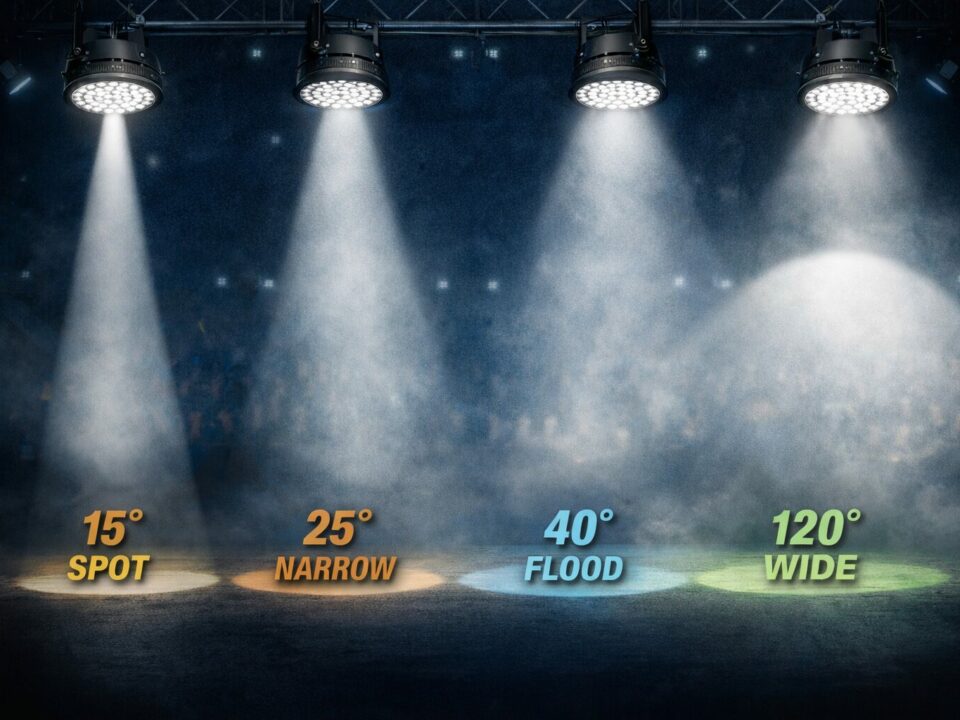
Beam angle determines how the light spreads after it leaves the lamp. This is one of the most important parts of your audit because two lamps with similar wattages can feel completely different in the room if their beam angles differ.
| Beam Angle | Lighting Behavior | Good Fit For |
|---|---|---|
| 15° Spot | Tight, controlled, focused beam | Longer throws, podiums, performers, pulpit highlights, accent points, and spotlight-style coverage |
| 25° Narrow Flood | Controlled spread with more usable coverage than a spot | Stage wash, platform lighting, presentation areas, worship spaces, and moderate throw distances |
| 40° Flood | Balanced coverage and overlap | Auditoriums, theaters, school stages, sanctuaries, multipurpose rooms, and general venue wash |
| 120° Wide Flood | Very broad spread | Short-throw applications, wide ambient coverage, low mounting heights, and broad-area lighting |
One common mistake is choosing a beam angle based only on what is currently installed. The old lamp may not have been the right choice in the first place. Instead, think about what each zone needs to do. Do you need to highlight a speaker? Wash a stage evenly? Light a choir area? Add warmth to a retail display? Cover a multipurpose event room? The answer should guide the beam angle.
Helpful internal resource: Which PAR Beam Angle Should You Use?
Step 5: Check Power Connection Type
Next, check how the existing lamp connects. This is where photos help a lot. Before ordering, capture clear images of the fixture interior, socket, wiring, existing lamp base, and any connector or adapter currently in use.
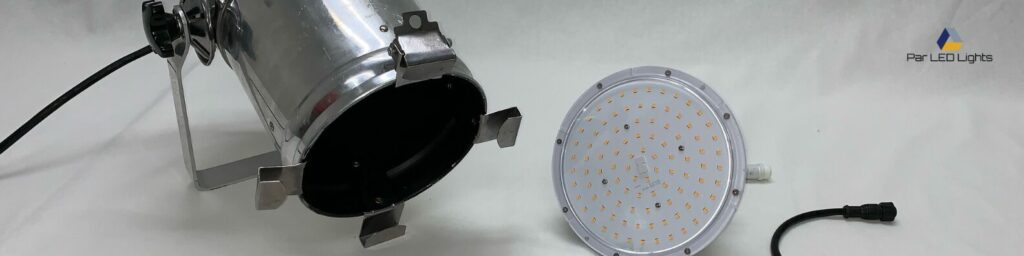
PAR LED Lights offers power connection options such as EX-39, GX16D, and WC2/whip connector options, depending on the lamp configuration. Your audit should identify which connection style your existing setup requires.
- EX-39 / mogul base style: Often used where the lamp screws into an existing compatible socket.
- GX16D adapter: Designed for internal PAR can connections.
- WC2 / whip connector: Allows the lamp to be wired directly into the line and should be handled by a qualified professional.
When in doubt, do not guess. Take photos and ask before ordering. This is one of the easiest places to avoid a mismatch.
Step 6: Confirm Dimming System Compatibility
Dimming is one of the most important parts of a successful retrofit. A lamp can fit physically and still disappoint if it does not work well with the existing control system.
During your audit, document how the current lights are controlled. Are they simple on/off circuits? Standard wall dimmers? A dimmer rack? 0–10V controls? A larger venue lighting system? Do different zones use different controls? Write it down.
PAR LED Lights retrofit lamps are designed with smooth dimming in mind, including TRIAC and 0–10V dimming compatibility on applicable models. Still, it is smart to verify your specific control environment before ordering, especially in theaters, churches, auditoriums, production spaces, and older buildings where control systems may have changed over time.
Safety note: If your audit involves opening fixtures, inspecting wiring, changing connections, or confirming line voltage, use a qualified electrician or experienced lighting professional. Always follow applicable electrical codes and manufacturer installation instructions.
Helpful internal resource: PAR Can Installation Instructions
Step 7: Choose Color Temperature Needs by Space
Color temperature affects how the space feels and how people, sets, products, finishes, and camera images appear. This is especially important in churches, theaters, livestream areas, restaurants, retail displays, galleries, stages, and event venues.
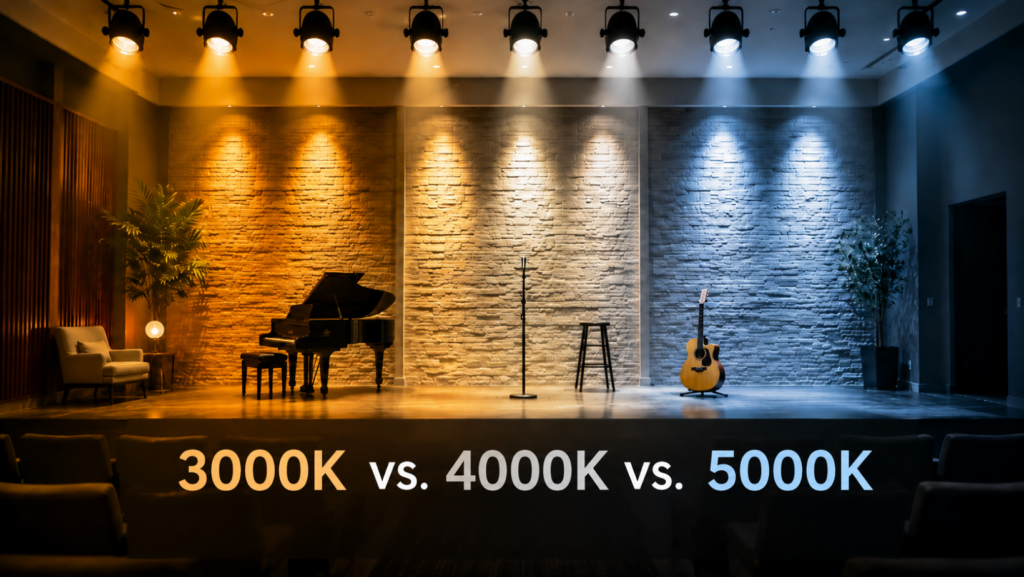
PAR LED Lights offer selectable color temperatures, including 3000K, 4000K, and 5000K in a single lamp. That flexibility can make retrofits easier because you are not locked into a single permanent color temperature before seeing the space under the new lamps.
| Color Temperature | Look and Feel | Common Uses |
|---|---|---|
| 3000K Warm White | Warmer, softer, more inviting | Churches, hospitality spaces, restaurants, intimate venues, and warm ambient settings |
| 4000K Neutral White | Clean and balanced | Auditoriums, multipurpose rooms, retail displays, conference spaces, and general presentation lighting |
| 5000K Cool White | Brighter, crisper, more daylight-like | Task-oriented commercial spaces, high-visibility areas, some event applications, and spaces where a crisp white look is preferred |
During your audit, do not just choose a single color temperature for the whole building out of habit. A sanctuary, lobby, retail display, stage, and multipurpose room may each benefit from a different look. Multi-CCT lamps give you room to fine-tune after installation.
Step 8: Decide Whether You Need PAR56, PAR64, or Both
Some venues can standardize around one lamp family. Others should use both PAR56 and PAR64. The right answer depends on fixture size, throw distance, ceiling height, output needs, and the type of lighting each zone requires.
A school auditorium, for example, might use PAR64 lamps for stronger front wash and PAR56 lamps for smaller side or accent zones. A church might use PAR64 lamps for a high sanctuary platform and PAR56 lamps in a lower-ceiling fellowship hall. A retail or event facility might use different beam angles and lamp families depending on ceiling height and display layout.
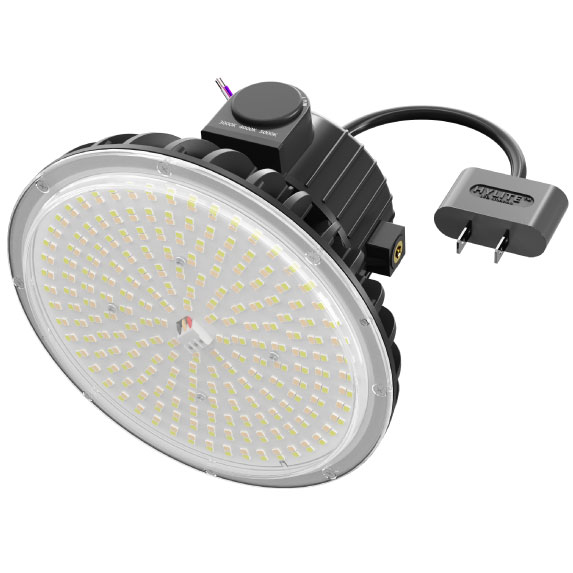
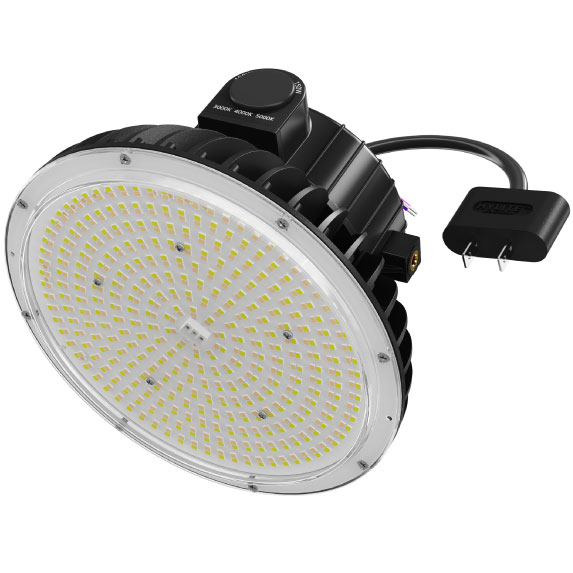
The audit helps you avoid the all-or-nothing trap. You may not need the same lamp everywhere. You need the right lamp for each zone.
What to Send When You Request a Recommendation
If you want help choosing the right PAR LED retrofit lamps, send the information from your audit. A few photos and basic measurements can go a long way.
Send These Details
- Venue type, such as church, theater, school auditorium, event venue, retail space, restaurant, or commercial facility
- Number of existing PAR can fixtures
- Current lamp type, if known
- PAR56 or PAR64 fixture size, if known
- Mounting height and approximate throw distance
- Photos of the fixture, socket, wiring, and existing lamp
- Desired beam purpose by zone: spot, wash, accent, ambient, display, platform, or stage coverage
- Existing dimming or control system information
- Preferred color temperature, or whether you want flexibility between 3000K, 4000K, and 5000K
- Any unusual conditions, such as dust, moisture, outdoor exposure, heat, difficult access, or limited maintenance windows
Sample PAR Can Retrofit Audit
Here is what a simple audit might look like for a venue manager preparing to upgrade an auditorium or worship space:
| Zone | Fixture Count | Likely Lamp Family | Beam Goal | Notes |
|---|---|---|---|---|
| Main stage front wash | 8 | PAR64 | 25° or 40° | Higher ceiling, needs smooth coverage across presenters and performers |
| Pulpit/podium highlight | 2 | PAR56 or PAR64 | 15° or 25° | Focused lighting without spilling into nearby zones |
| Choir/back platform | 4 | PAR56 | 40° | Broader coverage at a moderate distance |
| Lobby / multipurpose area | 6 | PAR56 | 40° or 120° | Wide coverage, lower mounting height, less theatrical focus needed |
Common Audit Mistakes to Avoid
A retrofit audit is simple, but a few mistakes can create confusion when buying.
- Only counting fixtures, not zones. A venue may need different beam angles and output levels in different areas.
- Choosing only by wattage. Wattage tells you the power use, not the full lighting result. Output, beam angle, mounting height, and throw distance matter too.
- Ignoring the dimming system. Dimming compatibility can make or break the final experience, especially in theaters, churches, and event spaces.
- Assuming the old lamp was correct. The existing lamp may have been chosen years ago for a completely different use case.
- Forgetting maintenance access. A hard-to-reach fixture is a good reason to prioritize long-life performance and the correct lamp the first time.
- Not taking photos. Photos of the fixture interior, socket, wiring, and mounting location are often the fastest way to prevent confusion.
Recommended Next Step
Once the audit is complete, build a simple shopping list by zone. Instead of writing “replace all PAR cans,” write something more specific:
- 8 PAR64 LED retrofit lamps for main stage wash
- 2 PAR64 narrow-beam lamps for pulpit or podium focus
- 4 PAR56 flood lamps for choir or back platform coverage
- 6 PAR56 wide-flood lamps for lower-ceiling ambient coverage
That kind of list makes it much easier to compare products, confirm the connection type, choose the beam angle, and avoid buying too many of one lamp style and not enough of another.
Need Help Choosing the Right PAR LED Retrofit?
Send us your audit notes, fixture photos, mounting height, beam goals, and dimming setup. We can help match your existing PAR cans to the right PAR56 or PAR64 LED retrofit lamps.
PAR Can Retrofit Audit FAQs
What is the first thing to check before ordering PAR LED retrofit lamps?
Start by confirming your existing fixture size and lamp type. Determine whether your fixtures are PAR56, PAR64, or another size, then document the power connection, mounting height, beam goal, and dimming setup.
Do I need to replace the entire PAR can fixture?
Not always. PAR LED retrofit lamps are designed to upgrade compatible existing PAR can fixtures without replacing the entire fixture. That can reduce disruption, preserve existing infrastructure, and simplify the upgrade process.
How do I know which beam angle to choose?
Choose a beam angle based on the job. Use narrower beam angles, such as 15° or 25°, for tighter focus and longer throws. Use 40° for a more balanced stage or room coverage. Use 120° for very wide, short-throw ambient coverage.
Can one venue use both PAR56 and PAR64 LED retrofit lamps?
Yes. Many venues use a mix. PAR64 lamps often make sense for higher-output areas, longer throws, larger stages, and bigger rooms. PAR56 lamps may work well for smaller fixtures, shorter throws, accent zones, and lower mounting heights.
Should an electrician check the fixture before ordering?
If you are unsure about wiring, voltage, fixture condition, or connection type, have a qualified electrician or lighting professional inspect the fixture. This is especially important for hardwired connections, older buildings, and venues with complex dimming systems.
What information should I send to PAR LED Lights for help?
Send your fixture count, photos, PAR can size, mounting height, throw distance, desired beam coverage, current dimming system, connection type, and color temperature goals. The more details you provide, the easier it is to recommend the right lamp.
Ready to compare options? Browse PAR56 LED retrofit lamps, PAR64 LED retrofit lamps, or visit the PAR LED Lights shop to choose by size, wattage, beam angle, and power connection.