

How LED Retrofits Power Up Small Venues
August 6, 2025
LED Retrofits in Barn Venues and Wedding Halls
August 12, 2025
Quiet Stage & Sanctuary Lighting
Fanless LED Retrofits for Quieter Stages and Sanctuaries
In many performance spaces, unexpected sounds can come from overhead lighting systems, including fan noise, lamp vibration, dimmers, wiring, or other electrical equipment. In cinemas, recording studios, theaters, and places of worship, reducing unnecessary background noise can help create a more focused environment for audiences, performers, and production teams.
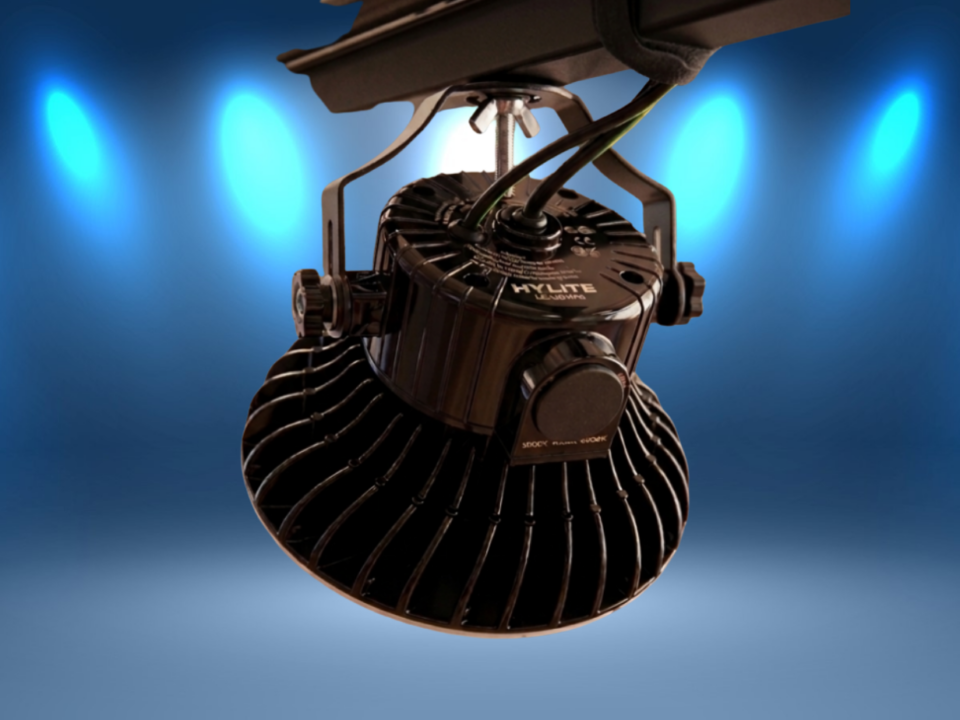
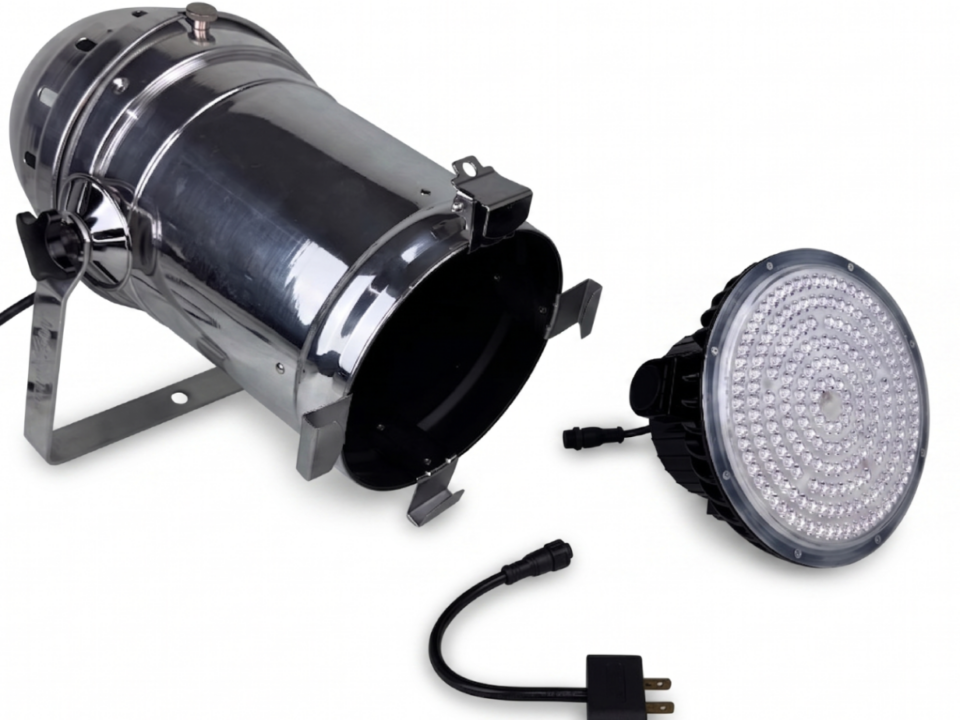
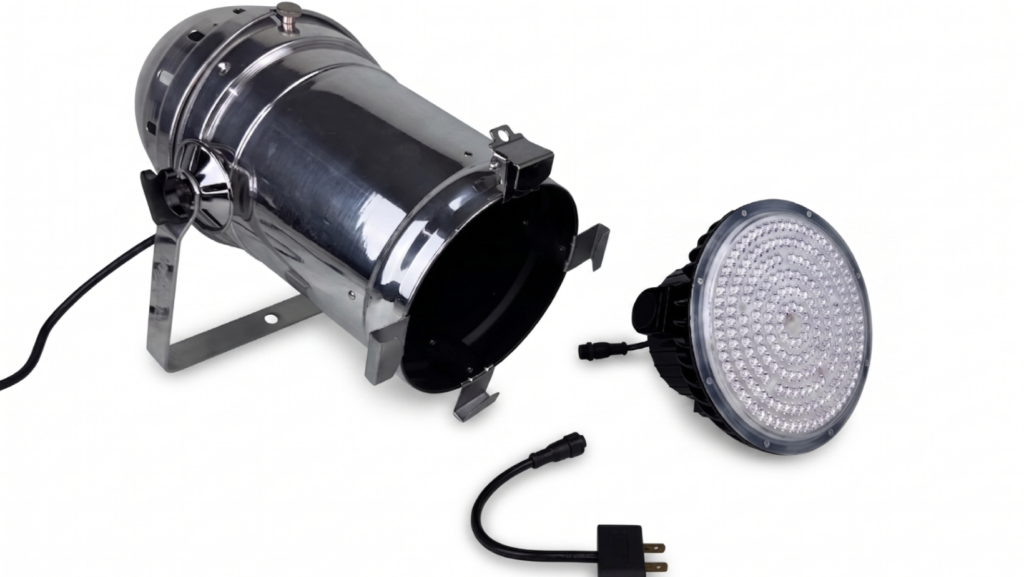
HyLite Lotus Lamp LED retrofits use a fanless passive-cooling design, removing a cooling fan as one potential source of mechanical noise within the lamp. For venues already using compatible PAR56 or PAR64 housings, a retrofit may modernize the light source while retaining suitable existing fixtures.
The Hum and Whir of Old Technology
Incandescent and halogen lamps have long been staples of stage lighting, but lighting systems can introduce unwanted noise in quiet environments. Depending on the equipment and controls in use, sources can include lamp vibration, dimmers, transformers, wiring, cooling fans, or other electrical components.
This can become particularly noticeable in venues that rely on quiet moments, such as dramatic theater scenes, spoken-word performances, recording environments, or prayer services.
Some high-output LED fixtures also use active cooling fans. In an intimate studio, theater, or church sanctuary, even a relatively quiet fan may be noticeable when microphones are open, or the room itself is very quiet. A fanless retrofit removes that particular mechanical component from the lamp design.
Why Passive Cooling Matters
HyLite describes the Lotus Lamp’s passive cooling design as having no moving parts. This removes a cooling fan as a source of mechanical noise within the lamp.
Fanless construction does not establish that an entire lighting installation will be silent. Existing dimmers, wiring, and other equipment still need evaluation. For sound-sensitive venues, test the proposed lamp with the actual controls before replacing a full set.
Why fanless design can be useful: eliminating an internal cooling fan removes one mechanical component that can create audible noise, while passive thermal management helps the lamp dissipate operating heat without moving parts.
Test One Configuration Before Upgrading the Entire Room
Have a qualified installer evaluate a lamp in the intended fixture. Run the lighting through the levels and transitions your team uses during services or performances. Listen from the audience area and through the normal audio system.
For recorded or livestreamed events, check the results using your actual cameras and settings. This evaluation helps identify whether the proposed lamp, fixture, and controls work together as required.

Fanless Lighting in Sound-Sensitive Spaces
Removing a cooling fan from the lamp can be particularly relevant in spaces where microphones, recording equipment, livestream systems, or quiet audience environments make mechanical noise more noticeable.
Still consider that design advantage as part of the complete lighting system. Dimmers, electrical infrastructure, fixture construction, room acoustics, cameras, and audio equipment can all influence the final result.
Evaluate acoustic performance, dimming, camera behavior, and fixture compatibility in the intended installation. You may be able to retain a suitable housing, but the electrical and thermal requirements still apply.
Using Lotus Lamps in Existing PAR Fixtures
Lotus Lamp LED retrofits may allow compatible existing PAR56 or PAR64 housings to remain in place rather than requiring complete fixture replacement. The correct lamp configuration depends on the existing fixture, connection method, clearance, electrical supply, beam requirements, and controls.
A qualified installer should perform installation following the approved manufacturer instructions and applicable electrical requirements. Bypass or remove any existing ballast as required for the installation, and maintain adequate clearance and ventilation.
Evaluate acoustic performance, dimming, camera behavior, and fixture compatibility in the intended installation. You may be able to retain a suitable housing, but the electrical and thermal requirements still apply.
Considering a Fanless PAR LED Retrofit?
A fanless lamp can remove one source of mechanical noise from the lighting equipment, making it worth evaluating for theaters, churches, studios, auditoriums, livestream environments, and other sound-sensitive venues.
Before upgrading an entire room, confirm your existing fixture type, connector, mounting conditions, dimmer, required beam coverage, and electrical requirements. Testing one representative configuration can help determine whether the proposed retrofit performs as required in your actual space.
Compare Fanless PAR Retrofit Options
Review the available retrofit families or tell us about your existing fixture and dimmer so we can help narrow down the configurations to evaluate.